

Introduction
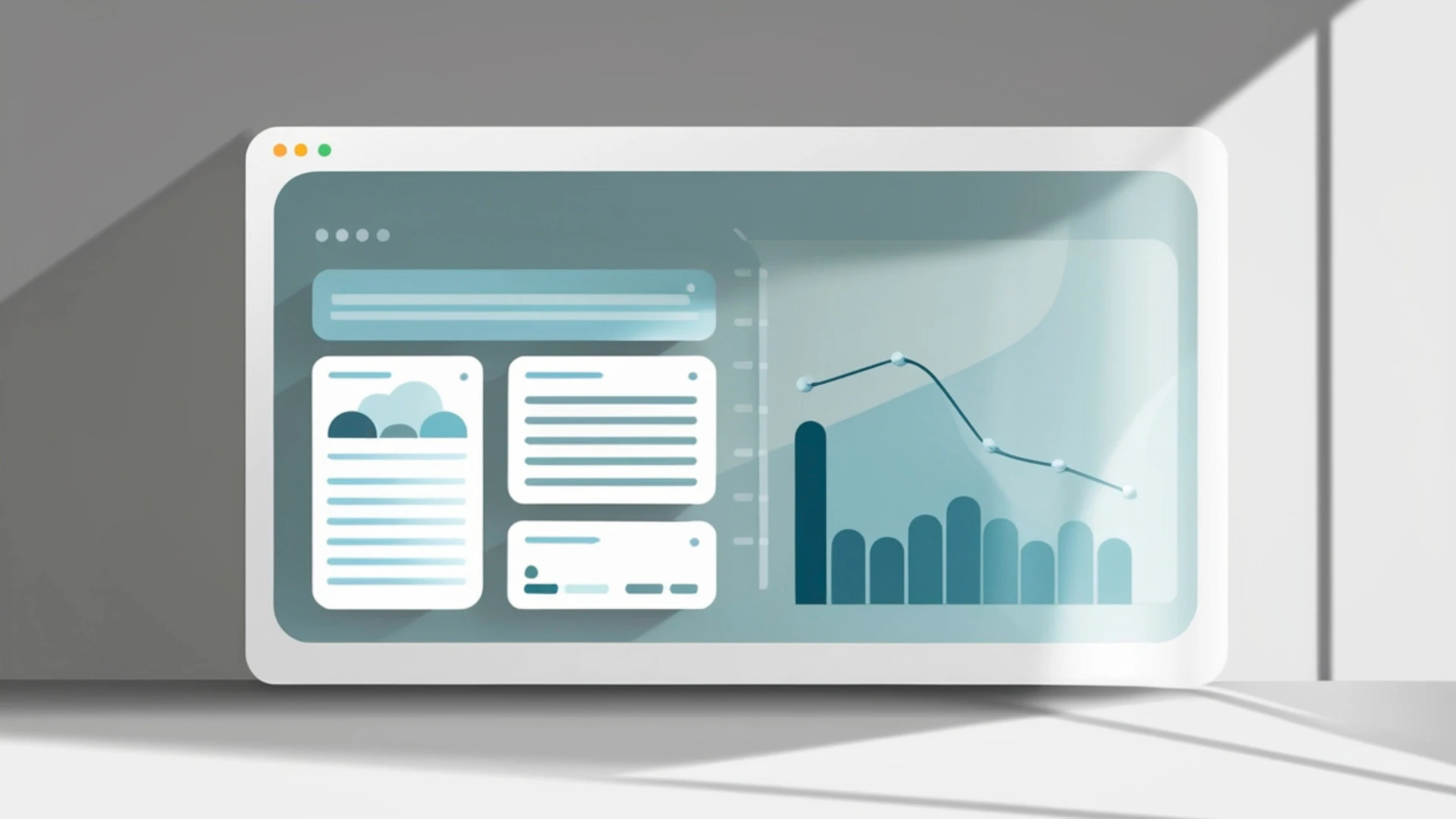
Real-time BI for market research is changing how insight teams deliver value to decision-makers. Market research teams are no longer judged only on the quality of their insights. They are also judged on how fast those insights reach the people making decisions.
This is happening because businesses are running more experiments, changing pricing faster, and facing shorter planning cycles. When leadership expects answers in days (not weeks), dashboards become the “operating system” for research—not a nice-to-have.
1) Why Real-Time BI for Market Research Is Replacing Report-Only Workflows
Dashboards solve a simple problem: insights decay with time. If a tracker result reaches stakeholders after the campaign already shifted, the learning is mostly wasted.
What’s driving adoption now:
◁ Faster decision loops: Many commercial teams now run weekly (or even daily) performance reviews, and research is expected to show up in that cadence.
◁ More stakeholders consuming insights: Instead of one research lead reading a deck, dashboards let sales, product, CX, and marketing self-serve.
◁ Hybrid data reality: Brands are blending survey data with CRM, web/app analytics, and transactional data—dashboards are the only practical “single view.”
A realistic operational pattern we see in modern orgs: 40%–70% of recurring trackers (brand/CX/usage) increasingly flow into dashboards first, with decks used mainly for quarterly narratives and strategic recommendations.
2) What Real-Time BI for Market Research Actually Means
“Real-time” doesn’t always mean second-by-second. In research, it usually means rapid refresh: hourly, daily, or “as field completes.” The real value is continuous visibility with the ability to slice the data instantly.
A practical dashboard stack typically includes:
◁ Clean ingestion: survey + panel data + first-party business data (when available)
◁ Standard metrics layer: consistent definitions (NPS, awareness, consideration, etc.)
◁ Governed views: role-based access, version control for questions/metrics
◁ Story layer: alerts, trend lines, and “what changed” summaries
Many teams aim for 50%–80% automation in refresh + reporting for trackers, while keeping human-led analysis for interpretation, implications, and “what to do next.”
InnResearch aligns well with this model by combining survey execution + processing + dashboarding, using BI tools like Power BI and Tableau, and delivering multi-format outputs for different teams.
3) The Business Impact of Real-Time Market Research Dashboards
When research lives in dashboards, three business behaviors shift immediately:
A. Faster course-correction
Teams can spot early signals—like message wear-out, rising complaint drivers, or segment-level drop-offs—before performance gaps become expensive.
B. Research becomes operational, not occasional
Instead of “a study,” it becomes “a system.” Many organizations see 40%–60% fewer one-off fire drills once they have stable dashboards for key KPIs (brand, CX, concept performance).
C. Credibility rises when everyone sees the same numbers
Dashboards reduce “spreadsheet wars” by centralizing definitions and making the research team the steward of metrics.
InnResearch’s emphasis on real-time monitoring, automated reporting, and analytics workflows is designed for this always-on consumption model.
4) Faster course correction with market research dashboards
Dashboards don’t fail because of charts—they fail because of trust.
Common failure points (and how to prevent them):
◁ Metric drift: the same KPI defined differently across teams → lock definitions and publish a “metric dictionary”
◁ Sampling confusion: stakeholders forget what a sample represents → add always-visible footnotes (base size, IR, field dates, weighting)
◁ Data quality skepticism: bad completes, speeders, duplicates → build visible QA flags and automated checks
◁ Over-filtering: users slice until the data breaks → set guardrails (minimum bases, suppressed small cells)
This is where research-grade quality controls matter. InnResearch highlights multi-layer security and quality checks, including verification steps and anti-fraud controls that protect the reliability of survey-driven dashboards.
5) Research dashboards make insights operational
Over the next 12–18 months, expect dashboards to evolve in three ways:
◁ More predictive: forecasting awareness/consideration changes based on leading indicators (media exposure, CX incidents, competitor moves)
◁ More narrative: auto-generated “what changed and why” summaries embedded into BI
◁ More integrated: tighter connections between research and operational data (support tickets, churn, trial, repeat)
In practice, many teams will move toward a split model:
◁ 60%–80% of recurring insight consumption happens through dashboards and alerts
◁ 20%–40% remains deep-dive storytelling (workshops, decks, strategic readouts)
Organizations that treat dashboards as a product—owned, governed, improved—will outperform those that treat them as a one-time reporting format.
Conclusion:
The shift from surveys to dashboards is not just a tooling upgrade—it’s a structural change in how decisions get made. The winners in 2024–2026 are the teams that combine speed + quality + governance, turning research into a living system rather than a periodic report.
When dashboards are built on clean data, consistent definitions, and research-grade quality controls, they stop being “charts” and start becoming a competitive advantage.
If you’re exploring how to move from periodic surveys to always-on insight dashboards—with strong data quality controls, automation, and stakeholder-ready reporting—InnResearch Market Solution can help you design the workflow, execute the research, and operationalize BI so insights reach decisions faster.